
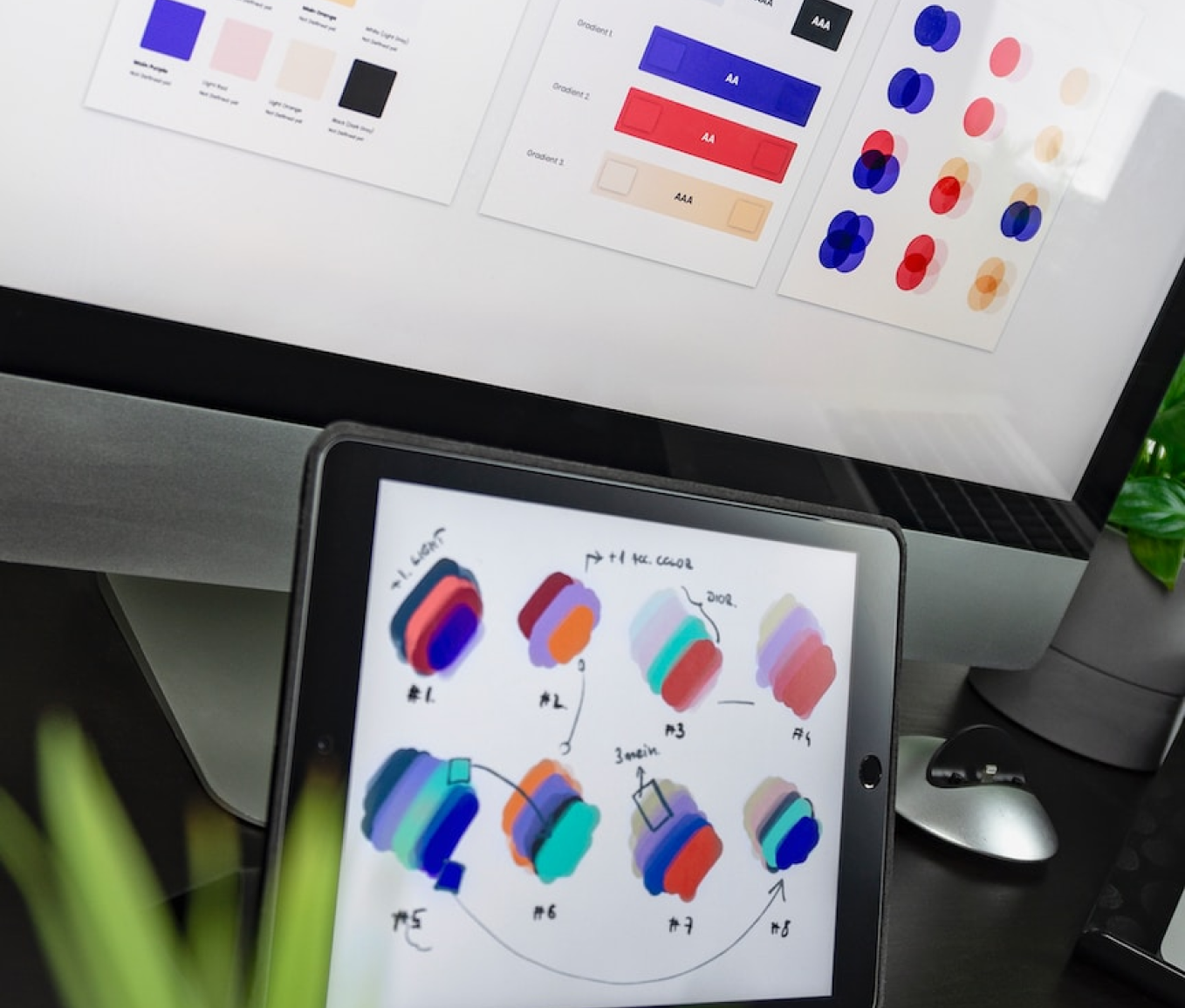
Art and Design
SEPR training programs award National diplomas and specialized skills certificates.
Level: from Beginners (ISCED* 3) to Experts (ISCED* 6). International Standard Classification of Education*
Duration: we offer tailored trainings, suited to your needs and expectations: short-term and long-term training courses.
* International Standard Classification of Education
Jewellery-making
Knowledge of materials, dominate technical gestures and the application of creative skills are the know-how deployed in jewellery-making professions. Jewellery involves working with metal or stones, on commission or as part of an artistic creation, in a company or on a freelance basis.
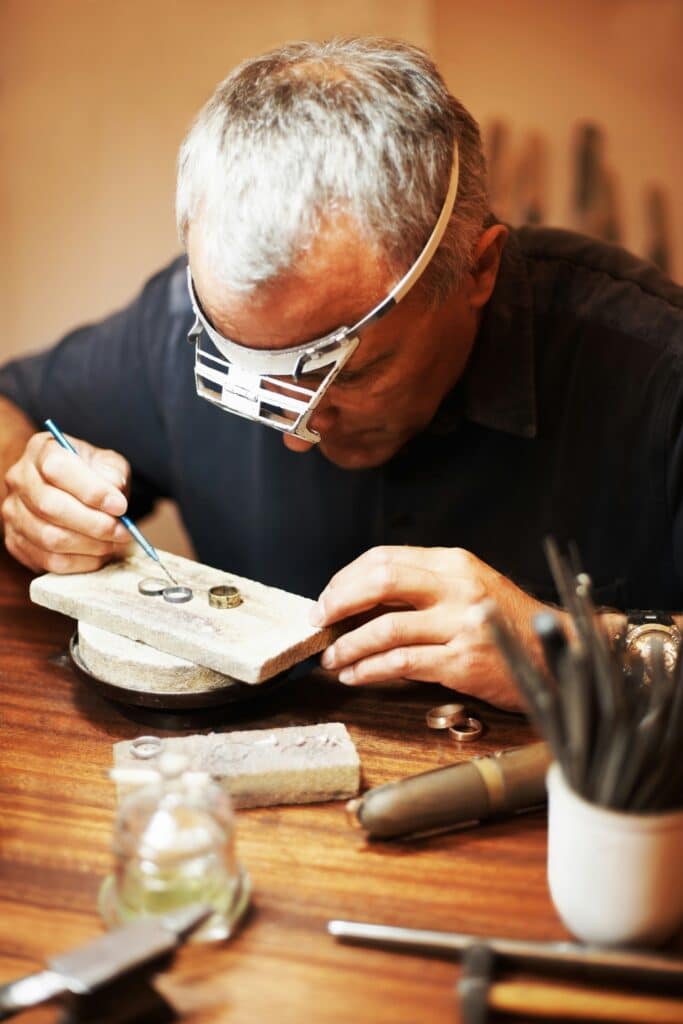
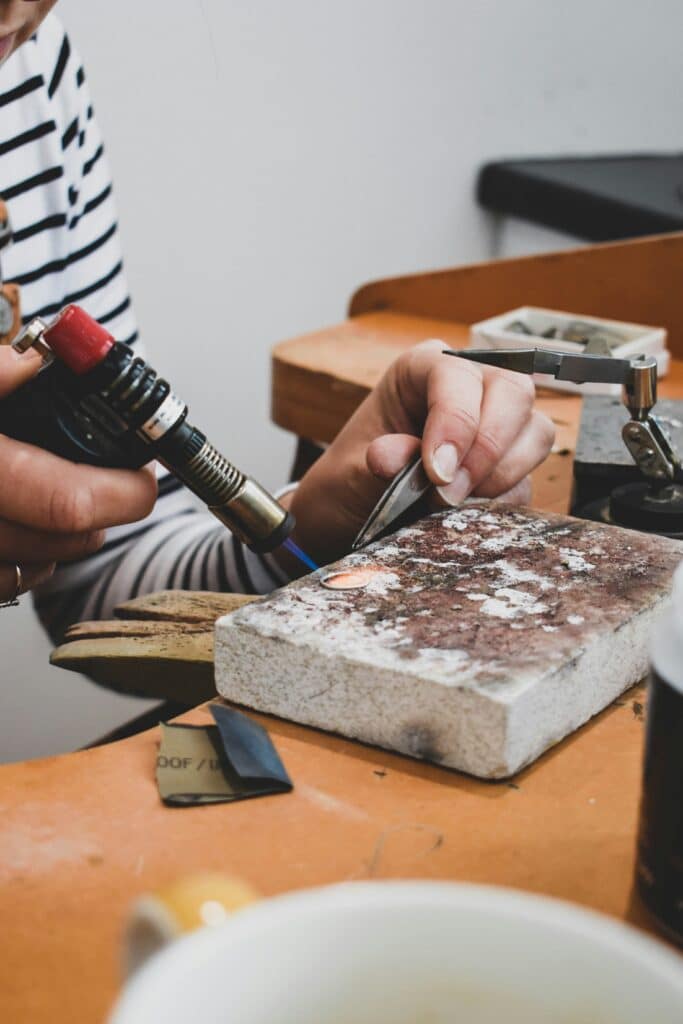
Goldsmith & Jeweller
Goldsmith & Jeweller
Goldsmiths & jewellers works with metal, while a jeweller creates settings for stones. Today, the two trades tend to merge, as stones and metal are often combined to create a piece of jewellery. goldsmith & jewellers create, transform and restore pieces using traditional and modern techniques. They create an object based on a concept.
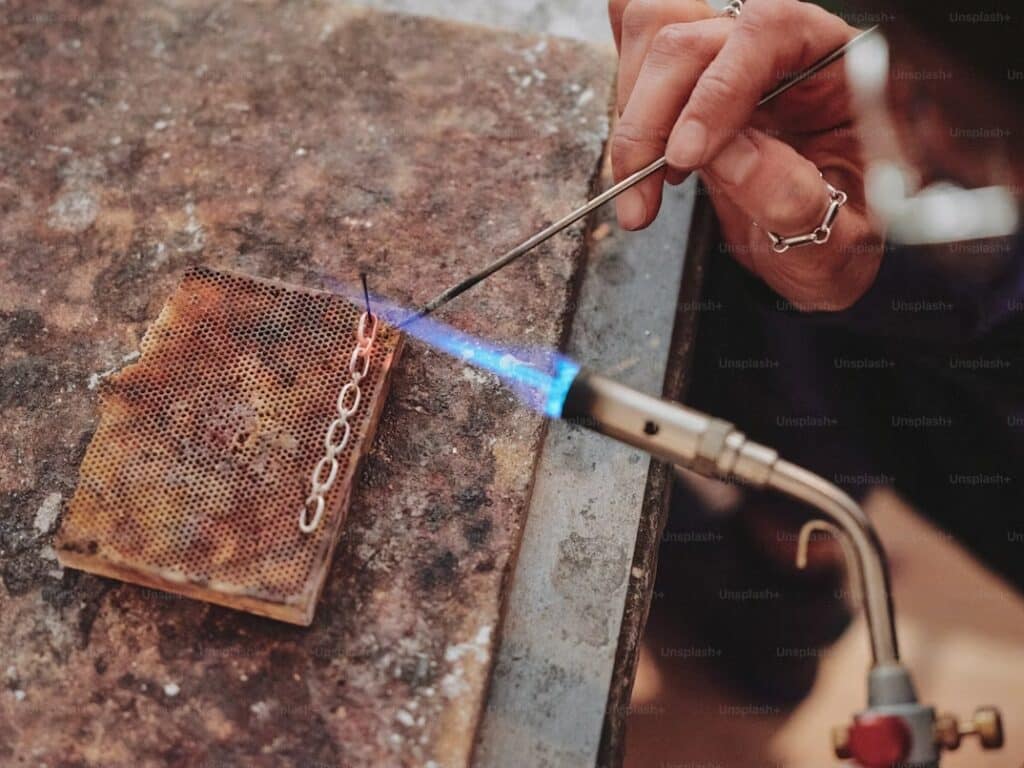
Gem Setter
Gem Setter
The setter’s job is to set precious stones into jewellery that the jeweller has previously made and prepared. A true decorative artist, the setter can enhance a piece of jewellery by accentuating the shapes of the gems.
Polisher
Polisher
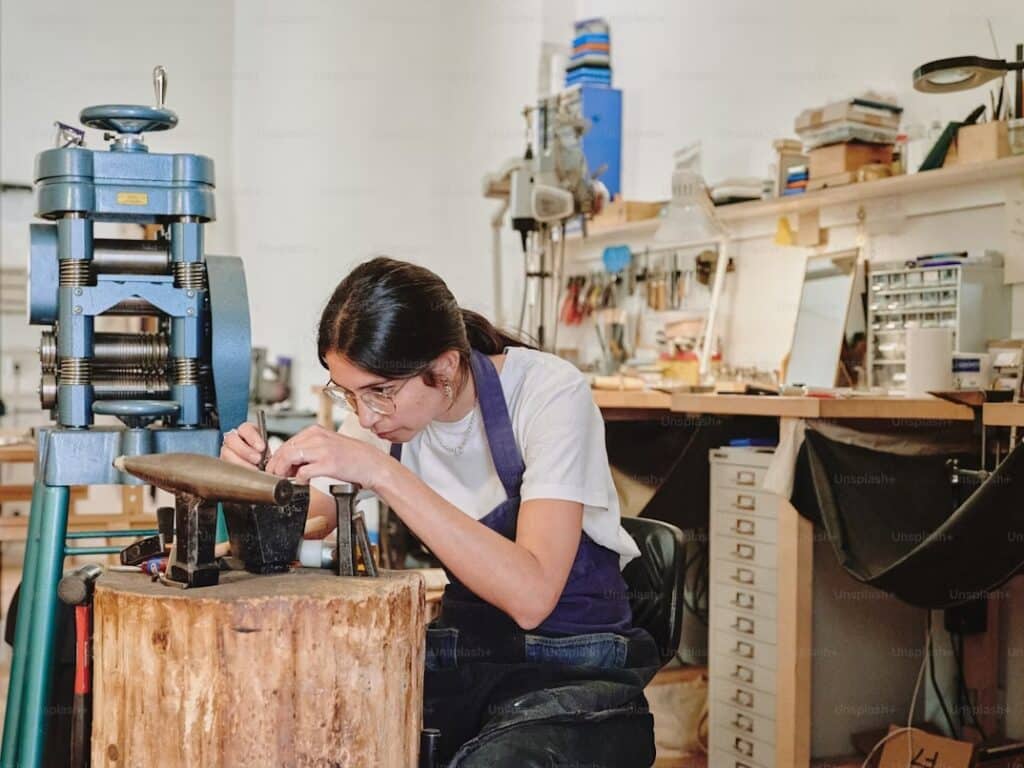
The final stage in the manufacturing process, the polisher finishes the jewel. Polishing is carried out using a lathe, by hand, in baths, with ultrasonic methods, by electrolysis, or through sanding.
Jeweller
Jeweller
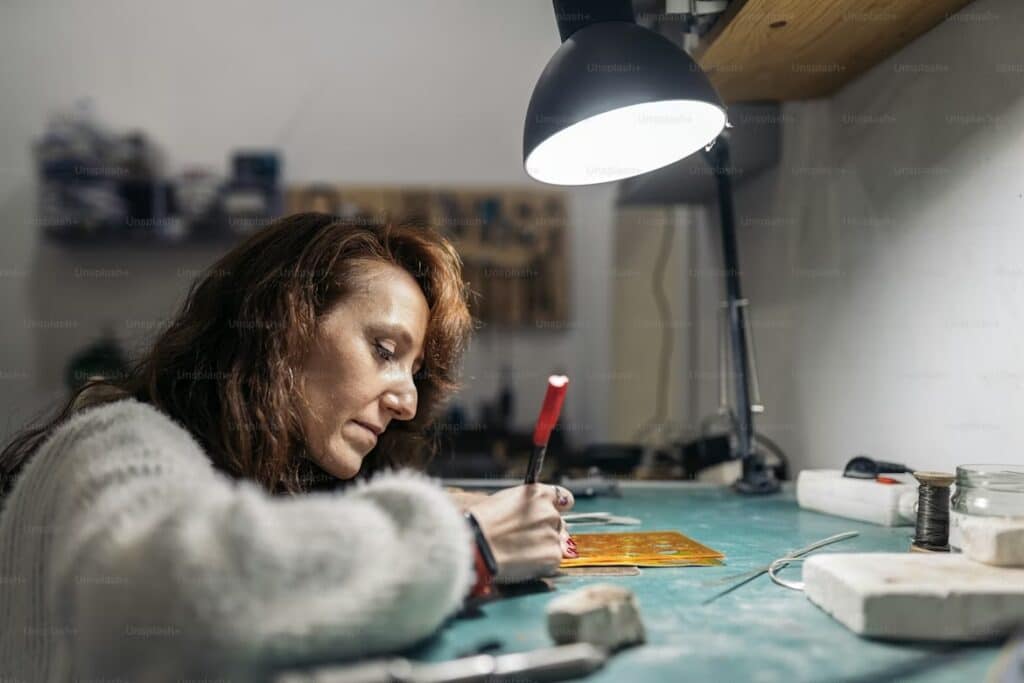
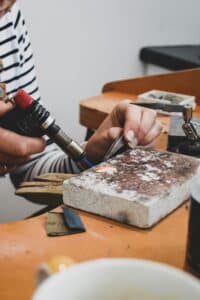 Jewellers make precious metal jewellery, often adorned with stones. Design, creation, meticulousness, fabrication, sculpture and metal forging are all part of the jeweller’s daily routine. At the start of a project, jewellers are accompanied by 3D designers, then move on to the casting stage to shape the pieces and understand how they will fit together, right up to the final stage where they will ensure that the finished jewel is well crafted. Supple, agile hands are the key requirement. A successful piece is aesthetic, ergonomic, timeless and a source of emotion and wonder.
Design
Creative and innovative, but also in constant touch with society’s needs and constraints, designers are present everywhere. At the service of their professional or private customers, they know how to grasp trends, understand needs and adapt uses, while respecting the technical and cost constraints imposed on them, to create innovative objects and products that are both aesthetically pleasing and functional, or develop visual identities.

Jewellery designer
Jewellery designer
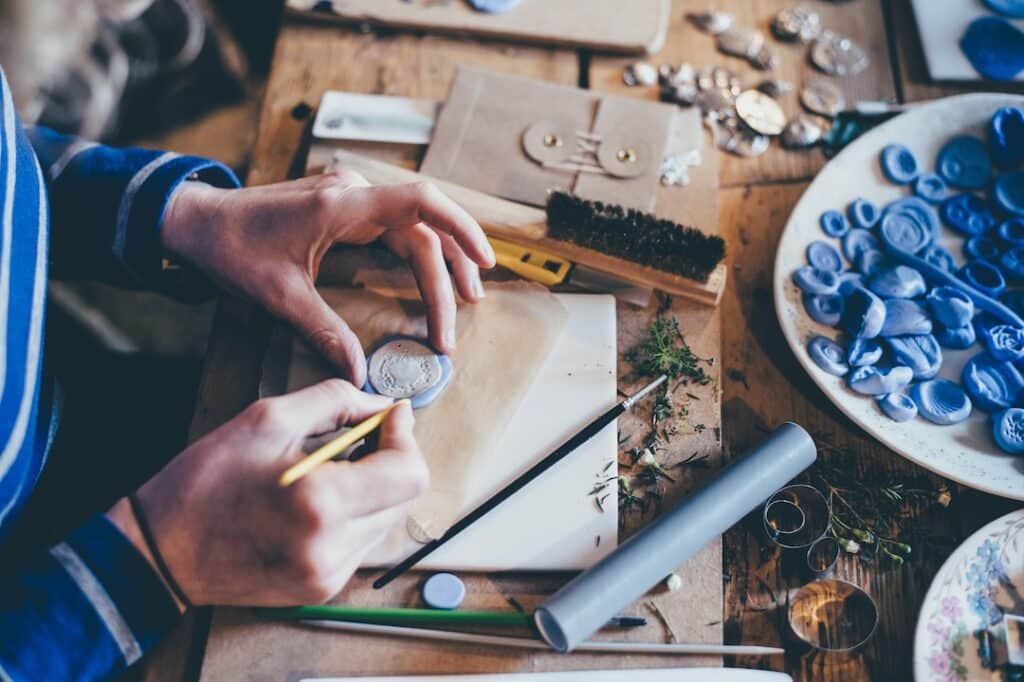
The in connection with other disciplines, creative processes that lead to the creation of precious jewellery or exceptional pieces,. The creative process is based on design trends, experimentation and the development of various object proposals, questioning their use and aesthetics. They can work in the fields of design, arts and crafts, the creative industry, companies and style offices.
Furniture designer / Cabinetmaker
Furniture designer / Cabinetmaker
At the crossroads of art and design, cabinetmaking embodies a comprehensive analysis of the ways in which furniture can be adapted to its environment. Wood is an undeniably a material of the future, whose use still offers a field of experimentation where conventional practices can be surpassed. Furniture designers need to understand the constraints of both traditional and innovative materials. He or she is attentive to eco-design issues and able to put himself or herself in a situation of experimentation and application in the realization of remarkable products.
Product designer
Product designer
Product designers arecreative and innovative professionals who shape the form and function of the objects we use every day. Combining aesthetic sensitivity, technical expertise and an understanding of users needs, product designers create attractive, ergonomic and functional products. From initial conception to final realization, their work involves research, prototyping and collaboration with multidisciplinary teams to bring to life innovative solutions that improve our daily lives.
Design maker
Design maker
design makers are defined as humanists of ecosystems and a specialists in their economic models. With ethics and progress at their core, they easily turn their ideas into reality by observing their target market, understanding it and putting their convictions into practice. design makers are also versatile professionals who combine creativity, design and craftsmanship to design and manufacture unique products. By combining design skills with practical manufacturing expertise, designer makers create distinctive objects, often handmade, reflecting both meticulous aesthetics and skilled craftsmanship. Their work often involves using a variety of materials, developing prototypes and manufacturing products that combine functionality and aesthetics. Design makers are key players in the collaborative economy.
Rare arts and crafts
In order to preserve rare and traditional arts and crafts, SEPR provides programs prepare learners for National diploma and/or specialized skills certificates
Decor and Furnishings / Cabinet making
Whether employed by a company or self-employed, cabinetmakers create and manufacture contemporary furniture, as well as restoring or copying antique pieces. Cabinetmaking requires a mastery of technical gestures, a good knowledge of classic and modern materials, and a creative flair.
Cabinetmaker
Cabinetmaker
They manufacture single units or small series of stylish or contemporary furniture, and can work on prototypes. They link aesthetic research of furniture and the development of models with their manufacture in the fields of interior architecture, decoration and design. The cabinetmaker’s trade has never ceased to evolve, adapting to new techniques (CAD, CAD/CAM, etc.) and new materials, without ever forgetting the basics of traditional cabinetmaking. Cabinetmakers work in workshops or on site.
Trademark maker
Trademark maker
They carry out their work in an essentially craft context, usually associated with a cabinetmaker, and involved in the manufacture or restoration of a wide variety of objects: furniture, paintings, musical instruments, jewellery, wall surfaces, tableware…
Furniture restorer
Furniture restorer
Restores or conserves period furniture according to the principles of restoration/conservation. They must fully appreciate their work to respect the integrity and historical style of the piece of furniture.
Furniture designer
Furniture designer
Excellent cabinetmakers, they master the techniques and are able to create furniture in response to a customer request. They have a perfect knowledge of the history of furniture and contemporary design.
Mode
Fashion professions cover a wide range of skills: creation, arts and crafts, design, manufacturing, research and innovation. The “flou” technique is used to create soft, unstructured clothing: the textile is adjusted, cut, pinned and draped according to the designer’s wishes.
Fashion designer
Fashion designer
Fashion Designers are responsible for the technical and qualitative fine-tuning of a model, based on specifications, sketches, technical notes and materials proposed by the stylist, according to manufacturing standards and production imperatives (deadlines, cost, quality…). They use CAD (Computer-Aided Design) software and adjust shapes after fittings. They prepare technical documentation for production. They work in collaboration with the stylist, the sales department and the production workshops.
Prototypist
Prototypist
Between creation and production, soft-materials-prototypists make prototypes and models of products for the clothing, textile and leather goods industries, as well as for the automotive and aeronautics industries for technical fabrics. It’s a strategic job, because it’s the key to defining the parameters for series production: management of skills involved in the entire manufacturing process for the part, rigor and care in creating the prototype, as it prefigures the quality of the series in production.
Textile creator
Textile creator
Textile creators or “designers” are attached to the notion of creation and decoration. They can innovate, create, imagine new textures and shapes, give garments the colourful touch they lack, and make them attractive with new patterns and shapes. From texture to hues and patterns, they are involved in every stage of textile creation. It’s a job that calls for advanced technical and aesthetic knowledge, but also for strong interpersonal skills.
Workshop technician
Workshop technician
They are involved in small-scale production and in monitoring large-scale production runs. They work in the workshop, design office or methods office. Garment industry workshop or design office technicians are responsible for producing prototypes. They are involved throughout the garment manufacturing chain: definition, industrialization, production, assembly and inspection of garment components.
Discover our trainings
SEPR VET schoolQuestions?
Want to collaborate with us?
If you have a question, would like to know further about our projects or services, or would to work with us,
do not hesitate to contact us