
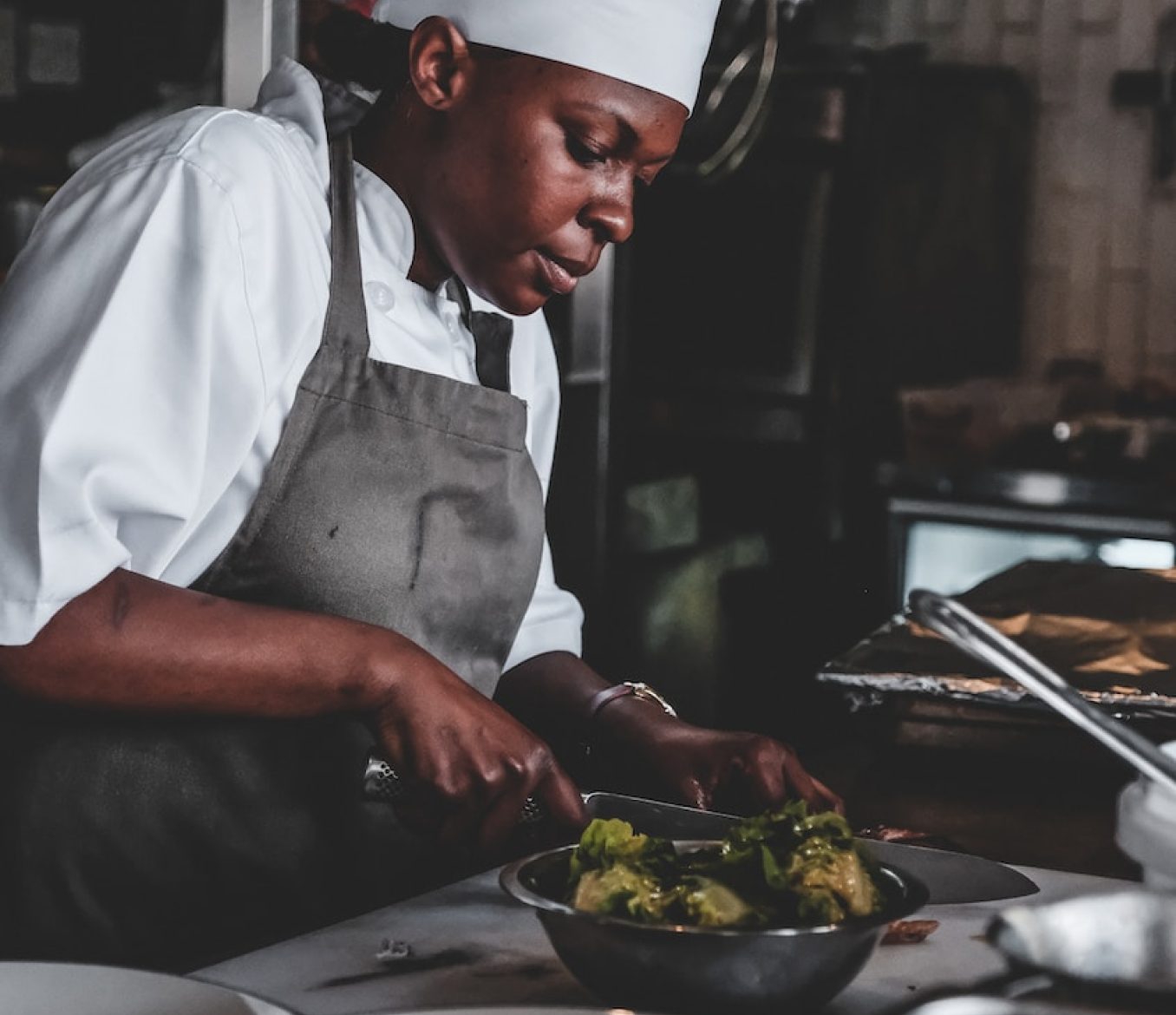
Food service and catering
SEPR training programs award National diplomas and specialized skills certificates.
Level: from Beginners (ISCED* 3) to Intermediate (ISCED* 4).
Duration: we offer tailored trainings, suited to your needs and expectations: short-term and long-term training courses.
* International Standard Classification of Education
Bakery & Pastry
Breads, viennoiseries, pastries… the whole world is familiar with these products, typical of the French art of living, representing a know-how born of a long tradition and demanding training. To work in these professions, you need to be passionate and early risers: whether you’re a craftsman or an employee, the working day starts very early, including Sundays and public holidays.


Baker
Baker
Makes traditional breads, special breads and pastries. They ensure the sale of their products. To produce a wide variety of quality products, they need to have a good knowledge of the characteristics of the raw materials and how to use them. Work starts very early in the morning, despite advances in equipment that enable better management of working hours. They work between 39 and 42 hours a week, as well as public holidays and weekends.
Pastry chef
Pastry chef
Makes and sells pastries. They need to know about the different ingredients used (flour, sugar, flavoring, etc.), as well as manufacturing, baking and refrigeration techniques…. pastry chefs also know how to be creative in their productions, taking particular care in decorating his cakes.
Butcher and charcuterie
Whether raw or cooked, meat is the flagship product processed by butchery and charcuterie professionals. These training courses are highly demanding, as they require the ability to guarantee impeccable product quality and freshness. These technical and advisory professions offer real career prospects.
Qualified butcher-preparer
Qualified butcher-preparer
Prepares meat from carcasses or cuts of meat, pork and poultry, selected directly from the slaughterhouse. To do this, they need to know the anatomy of the animals. They sell the products and advise their customers.
Highly qualified butcher
Highly qualified butcher
Organizes production, designs and produces marketable butchery products. Participates in laboratory management, in particular to optimize quality and productivity. They participate in the accounting management of the department. They can hold positions of responsibility in craft businesses, restaurants or supermarkets.
Charcutier and caterer
Charcutier and caterer
Produces and sells charcuterie and catering arrangements, and must be familiar with the different ingredients used, as well as manufacturing, cooking, refrigeration and preservation techniques… Production varies according to the calendar of festivals and annual events.
Cuisine
The culinary professions rely on mastery of basic recipes, cooking principles and food preservation to prepare dishes served in traditional or collective restaurants. Difficult but exciting, these professions are accessible to candidates with few qualifications, and offer excellent prospects for career development.
Cook
Cook
Prepares meals using culinary techniques and rules. They are involved in finishing dishes and checking their quality. They can develop new recipes, design menus and manage the stock of merchandise. It’s a demanding but rewarding job.
Cook specialised in low-calorie cooking
Cook specialised in low-calorie cooking
They can prepare dishes that are balanced, appetizing and tasty. They master both traditional and more recent culinary techniques. They know how to cook with little fat. They can also develop new recipes. Graduates can start out as cooks in thalassotherapy establishments, fitness centres or spas, as well as in collective or commercial restaurants offering low-fat meals.
Restaurant dessert cook
Restaurant dessert cook
Specializing in the preparation of restaurant desserts, this cook works as part of a kitchen brigade. They design and create pastries, savory and sweet petits fours (finger food), entremets (layered desserts), cakes, and ice creams… They ensure the monitoring of orders and the supply of their workstation (purchasing, receiving, and storing goods) and carry out quality control of their products (preservation, storage temperature) and productions. To carry out all these operations successfully, they need to be familiar with new products and the equipment used in pastry and kitchen workshops. These professionals must also adapt to staggered working hours and strict hygiene standards. They are also trained in health and safety regulations. Last but not least, they must adapt to the company’s requirements (staggered working hours, strict hygiene standards). After a few years’ experience, they can become specialized cooks or chef de partie (station chefs), depending on their personal abilities.
Fast food and institutional cook
Fast food and institutional cook
Fast-food, catering and cafeteria cooks prepare meals under the authority of managers in fast-food and takeaway outlets, contract catering establishments and meal tray manufacturers. In production, they receive and store products or prepared dishes. Assembling and enhancing simple dishes, in compliance with hygiene and safety regulations. They package and reheat prepared dishes. When on duty, they enhance the sales and distribution areas and replenishes supplies. They advise customers and presents products to them, and may take payment for services rendered. In terms of maintenance, they clean and tidy production utensils and premises. These professionals have to cope with a fast pace of work and standing, while remaining available to customers.
Restaurant industry
In the dining rooms of a restaurant, behind the counter of a bar or in a cafeteria, professionals are busy welcoming and serving customers, satisfying their requests and ensuring their comfort. These jobs require a sense of service, rigor, mobility and good physical condition.
Commis de restaurant (Restaurant assistant)
Commis de restaurant (Restaurant assistant)
This is a newcomer to the restaurant service profession, performing simple tasks. Under the supervision of a chef de rang, they help set up the service, lay the tables, clean the floors and carry out other preparatory tasks. During service, they participate by carrying out a few service tasks according to the manager’s instructions. Once they’ve acquired a little experience, they’ll be able to serve customers.
Commis de salle (Restaurant Service assistant)
Commis de salle (Restaurant Service assistant)
As a Commis de salle, you’ll be at the heart of the customer experience in the hospitality industry. Your key role is to support the front of house team and ensure an exceptional experience for every guest. If you have a passion for customer service, strong organizational skills and a positive attitude, this dynamic job is for you. The commis de salle is the backbone of customer service in the restaurant and hospitality industry. Responsible for a wide range of tasks, from preparing the room to welcoming customers and serving food and beverages, the commis de salle plays a crucial role in creating a memorable experience for customers.
Bartender
Bartender
Become an expert in the art of mixology as a bartender! Immerse yourself in the intoxicating world of mixology by becoming a bartender. As a key figure in the customer experience in the hospitality sector, you’ll be responsible for creating unique cocktails and providing exceptional service. If you’re passionate about drinks, creativity and human contact, this dynamic job is for you. The bartender is much more than just a drinks server. He is a mixology artist, a flavour expert and an ambassador of hospitality. Responsible for creating innovative cocktails, maintaining a welcoming bar atmosphere and managing customer requests, the bartender plays a crucial role in customer satisfaction and an establishment’s reputation.
Discover our trainings
SEPR VET SchoolQuestions?
Want to collaborate with us?
If you have a question, would like to know further about our projects or services, or would to work with us,
do not hesitate to contact us